

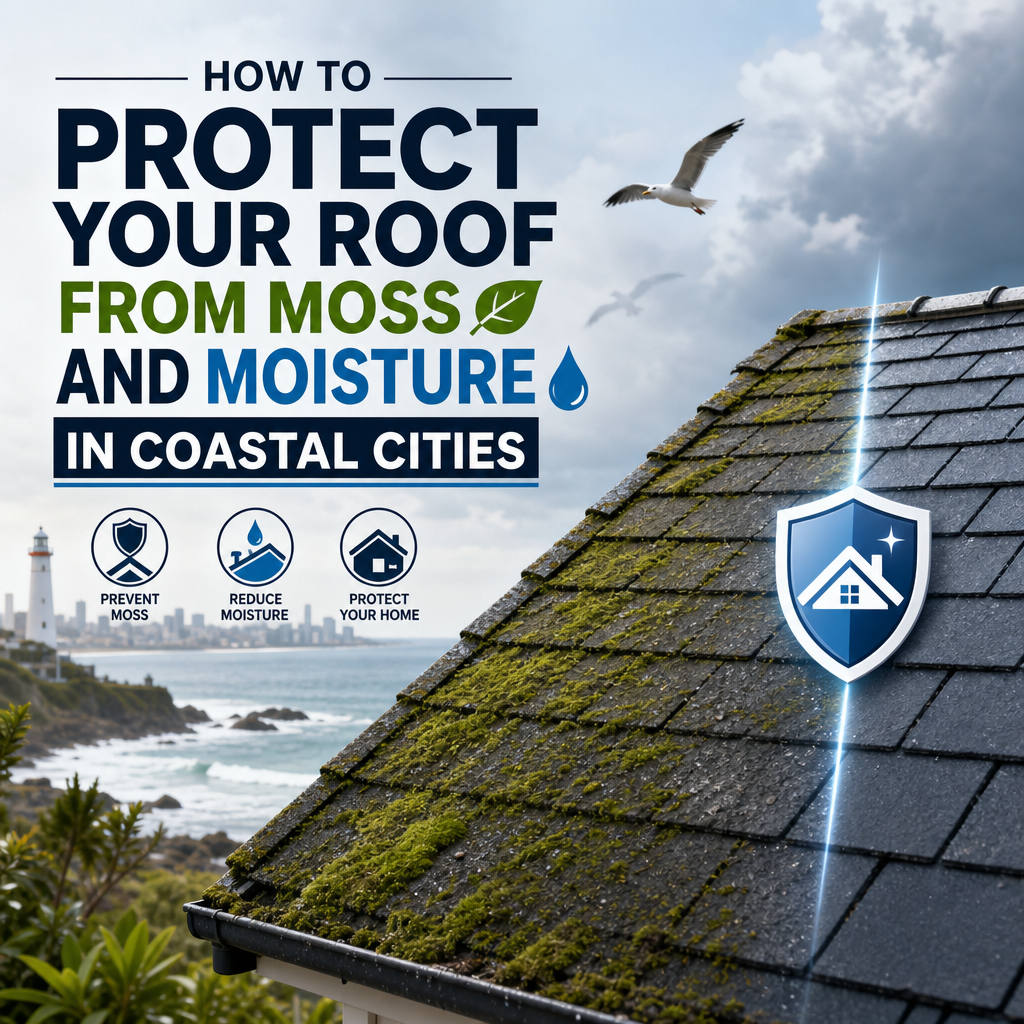
How to Protect Your Roof from Moss and Moisture in Coastal Cities
How to Protect Your Roof from Moss and Moisture in Coastal Cities
Living near the coast has many advantages: fresh air, ocean views, and milder temperatures. But coastal weather can be rough on your home, especially your roof. Constant humidity, salt in the air, frequent rain, and limited drying time create the perfect environment for moss, algae, and moisture damage.
If you want your roof to last longer and perform better, learning how to protect your roof from moss and moisture in coastal cities is essential. A little maintenance goes a long way in preventing costly repairs and extending the life of your roofing system.

Why Coastal Roofs Face Extra Risk
Roofs in coastal areas deal with more than just rain. The combination of damp air and salt spray creates conditions that allow moss and mildew to grow quickly. Once moss starts spreading, it holds moisture against the roof surface, which can weaken shingles, tile, and underlayment over time.
Common coastal roofing problems include:
- Moss and algae growth
- Corrosion of metal flashing and fasteners
- Water intrusion from clogged gutters or damaged shingles
- Rot in roof decking and fascia boards
- Premature wear caused by repeated wet-dry cycles
The challenge is not just keeping the roof clean. It is also about reducing the amount of moisture that stays trapped after storms and foggy mornings.

Choose Materials That Resist Moisture
One of the best ways to protect your roof from moss and moisture in coastal cities is to start with the right materials. Some roofing products are more resistant to damp conditions than others.
Good options for coastal homes include:
- Metal roofing with protective coatings
- Clay or concrete tiles that dry quickly
- Algae-resistant shingles
- Corrosion-resistant flashing and nails
- Water-resistant underlayment
If you are replacing your roof, ask a roofing professional about materials designed for humid and salty environments. Investing in stronger materials now can reduce maintenance later.
Keep the Roof Clean and Clear
Moss often begins in shaded areas where leaves, dirt, and debris collect. A clean roof dries faster and gives moss less chance to take hold.
Roof cleaning tips:
- Remove leaves, twigs, and branches regularly
- Clean gutters and downspouts so water drains properly
- Trim nearby trees to improve sunlight and airflow
- Wash off algae before it spreads
- Avoid aggressive pressure washing, which can damage shingles
For stubborn moss, use roof-safe cleaning solutions made for your roofing material. Always follow manufacturer guidelines to avoid harming the surface or shortening the roof’s lifespan.
Improve Ventilation in the Attic
Roof protection is not just about the exterior. Moisture can also build up from inside the house, especially if attic ventilation is poor. Warm indoor air rises and can condense beneath the roof deck, increasing dampness and encouraging mold or moss-related damage.
Signs of poor ventilation include:
- Musty smells in the attic
- Condensation on rafters
- Uneven roof temperatures
- Higher indoor humidity
- Peeling paint near roof edges
Proper ventilation helps air move through the attic and allows moisture to escape. Ridge vents, soffit vents, and attic fans can all help depending on your home’s design. A roofing specialist can assess whether your current system is working well.
Inspect the Roof Regularly
In coastal cities, small issues can turn into major ones faster than you might expect. Salt air and moisture can weaken materials gradually, so regular inspections are a smart habit.
Inspect your roof for:
- Missing or curling shingles
- Moss patches on shaded areas
- Rust on flashing, vents, or fasteners
- Cracked tiles or loose ridge caps
- Blocked drainage paths
- Water stains inside the attic or ceiling
You should inspect your roof after heavy storms and at least twice a year. If climbing onto the roof feels unsafe, use binoculars from the ground or hire a professional to check it for you.
Use Zinc or Copper Strips
A simple and effective method for slowing moss growth is installing zinc or copper strips near the ridge of the roof. When rainwater washes over these metals, it releases particles that help discourage moss and algae from growing below.
These strips are especially useful in damp, shaded coastal neighborhoods. While they do not replace cleaning or maintenance, they can be a helpful long-term defense.
Repair Damage Quickly
Even minor roof damage can let moisture in. A cracked shingle, loose flashing, or damaged seal around a vent can create openings where water enters and lingers. In coastal environments, that trapped moisture can spread faster than expected.
Fix problems such as:
- Broken or missing shingles
- Loose flashing around chimneys and skylights
- Gaps near roof penetrations
- Damaged gutters or downspouts
- Soft spots in the roof deck
The sooner you repair these issues, the better chance you have of avoiding mold, rot, and more expensive structural damage.
Don’t Forget the Gutters
Gutters play a major role in moisture control. If they are full of debris or not draining correctly, water can back up onto the roof edge and soak into the material. Over time, this creates the damp conditions moss loves.
Keep gutters in good shape by:
- Cleaning them seasonally
- Checking for sagging or separation
- Making sure downspouts direct water away from the foundation
- Replacing rusted or cracked sections
- Installing gutter guards if tree debris is a constant problem
Good drainage helps the roof dry faster after rain and reduces the chance of moss developing along the edges.
Final Thoughts
Coastal weather may be beautiful, but it is not always kind to your roof. Salt, humidity, and persistent moisture can lead to moss growth and long-term damage if you do not stay ahead of the problem. By choosing durable materials, keeping the surface clean, improving ventilation, and repairing issues early, you can protect your roof from moss and moisture in coastal cities more effectively.
A well-maintained roof not only lasts longer but also keeps your home safer and more comfortable through every rainy season.