

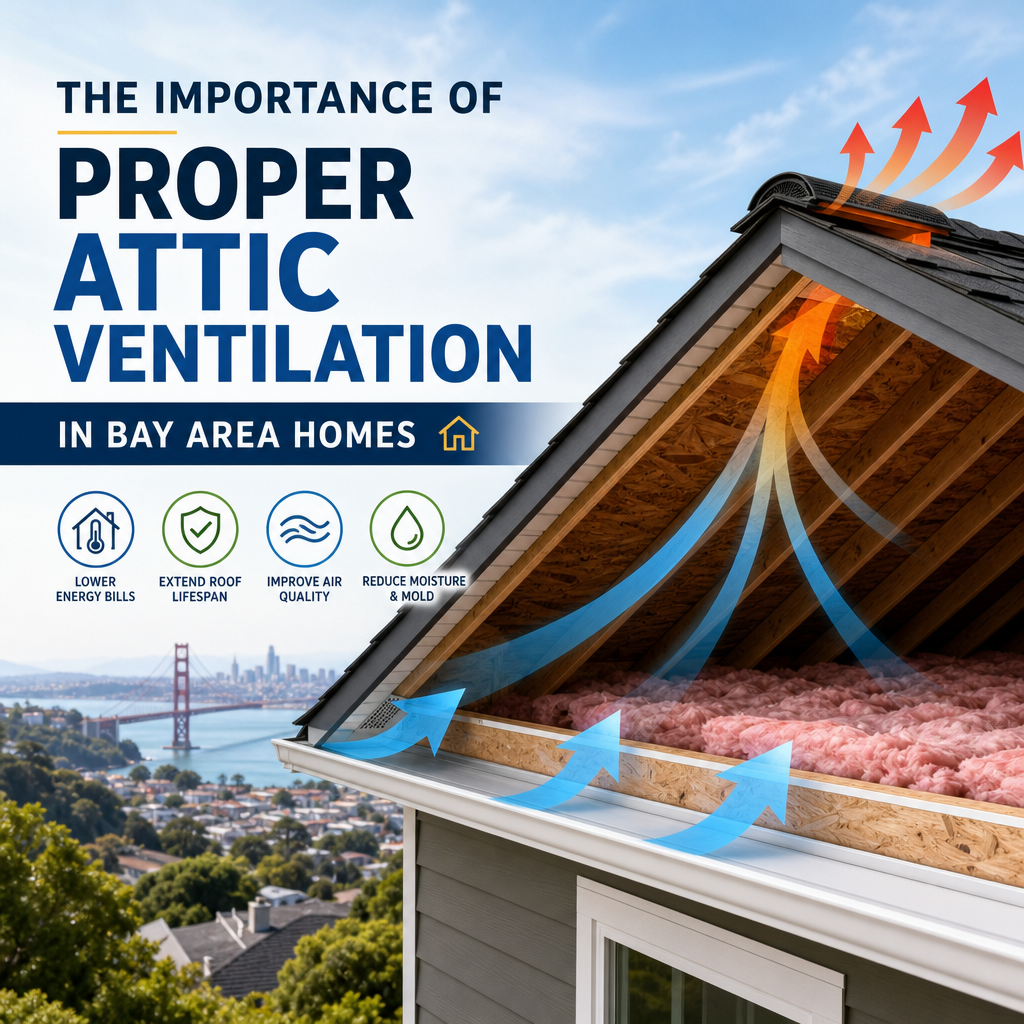
The Importance of Proper Attic Ventilation in Bay Area Homes
The Importance of Proper Attic Ventilation in Bay Area Homes
Proper attic ventilation is one of the most overlooked parts of home comfort and protection, yet it plays a major role in how well a house performs over time. In the Bay Area, where homeowners experience cool coastal air, warm inland temperatures, and seasonal moisture, attic airflow can make a real difference in energy efficiency, indoor comfort, and roof durability.
A well-ventilated attic helps regulate temperature and humidity. Without it, heat and moisture can become trapped, creating problems that affect not only the attic itself but the entire home.

Why attic ventilation matters
Attics naturally collect heat. In sunny climates, roof surfaces absorb warmth throughout the day, and that heat radiates into the attic space. In cooler months, moisture from daily activities like cooking, showering, and laundry can rise into the attic and condense on cold surfaces.
When airflow is limited, these conditions can lead to:

- Higher indoor temperatures
- Increased cooling costs
- Moisture buildup
- Mold and mildew growth
- Roof deck damage
- Reduced insulation performance
Proper attic ventilation helps release hot air and remove excess moisture before it causes long-term damage.
Bay Area weather makes ventilation especially important
The Bay Area has a unique climate mix. Homes near the coast may deal with cool fog and humidity, while inland areas can experience intense heat. This variation makes balanced attic ventilation especially valuable.
In warmer neighborhoods, a poorly ventilated attic can trap heat and push it down into the living spaces below. That makes air conditioning systems work harder and raises energy bills. In more humid areas, trapped moisture can create the ideal environment for rot, mold, and insulation damage.
Because the region’s weather shifts from one microclimate to another, attic ventilation needs to be designed with local conditions in mind.
Signs your attic may have poor ventilation
Many homeowners do not realize there is an attic ventilation issue until visible damage appears. Some warning signs are easy to spot if you know what to look for.
Common signs include:
- Excessive heat in upstairs rooms
- Musty odors coming from the attic
- Condensation on rafters or roof decking
- Mold spots or dark staining
- Curling or aging roof shingles
- Rust on metal fixtures
- Wet or compressed insulation
If your attic feels like a sauna in summer or shows signs of dampness in winter, ventilation may be part of the problem.
How proper attic ventilation works
A healthy attic ventilation system usually depends on a balance between intake and exhaust vents. Intake vents bring cooler air into the attic, while exhaust vents allow warm, moist air to escape.
This airflow helps keep attic temperatures closer to outdoor conditions and prevents moisture from lingering. Common ventilation components include:
- Soffit vents: Located under roof overhangs to bring in fresh air
- Ridge vents: Run along the roof peak to release hot air
- Gable vents: Installed on exterior attic walls to improve cross-ventilation
- Roof vents: Placed directly on the roof to assist air movement
For best results, these parts should work together as a system. Too much exhaust without enough intake can reduce effectiveness, while blocked vents can prevent airflow altogether.
Benefits of proper attic ventilation
A well-ventilated attic offers more than just comfort. It helps protect one of the most important investments most people make: their home.
Key benefits include:
1. Lower energy costs
By reducing heat buildup, attic ventilation can help your HVAC system run more efficiently, especially during warm Bay Area afternoons.
2. Longer roof lifespan
Excess heat and moisture can age roofing materials faster. Good airflow helps preserve shingles, underlayment, and roof decking.
3. Better moisture control
Ventilation reduces the chance of condensation, which can lead to mold, wood rot, and insulation damage.
4. Improved indoor comfort
A cooler attic means less heat transfers into the rooms below, helping your home stay more comfortable throughout the year.
5. Healthier living conditions
Reducing mold and mildew growth can improve air quality and lower the risk of unpleasant odors or allergen buildup.
Don’t ignore insulation and air sealing
Attic ventilation works best when paired with proper insulation and air sealing. If warm air from inside the home leaks into the attic through gaps, even a good ventilation system may struggle to control moisture and temperature.
That is why it is important to check for:
- Gaps around light fixtures
- Leaks near plumbing or ductwork
- Openings around attic access panels
- Damaged or missing insulation
Air sealing prevents unwanted heat and moisture from entering the attic, while insulation helps keep conditioned air inside the home. Together with ventilation, they create a more efficient and durable building envelope.
Final thoughts
For Bay Area homeowners, proper attic ventilation is not a luxury. It is a practical way to protect your roof, improve energy efficiency, and reduce moisture-related problems. Whether your home faces coastal humidity or inland heat, a balanced attic ventilation system can help keep your home healthier and more comfortable year-round.
If you notice signs of trapped heat or moisture, it may be time to have your attic inspected. Addressing ventilation issues early can prevent expensive repairs and help your home perform better in every season.