

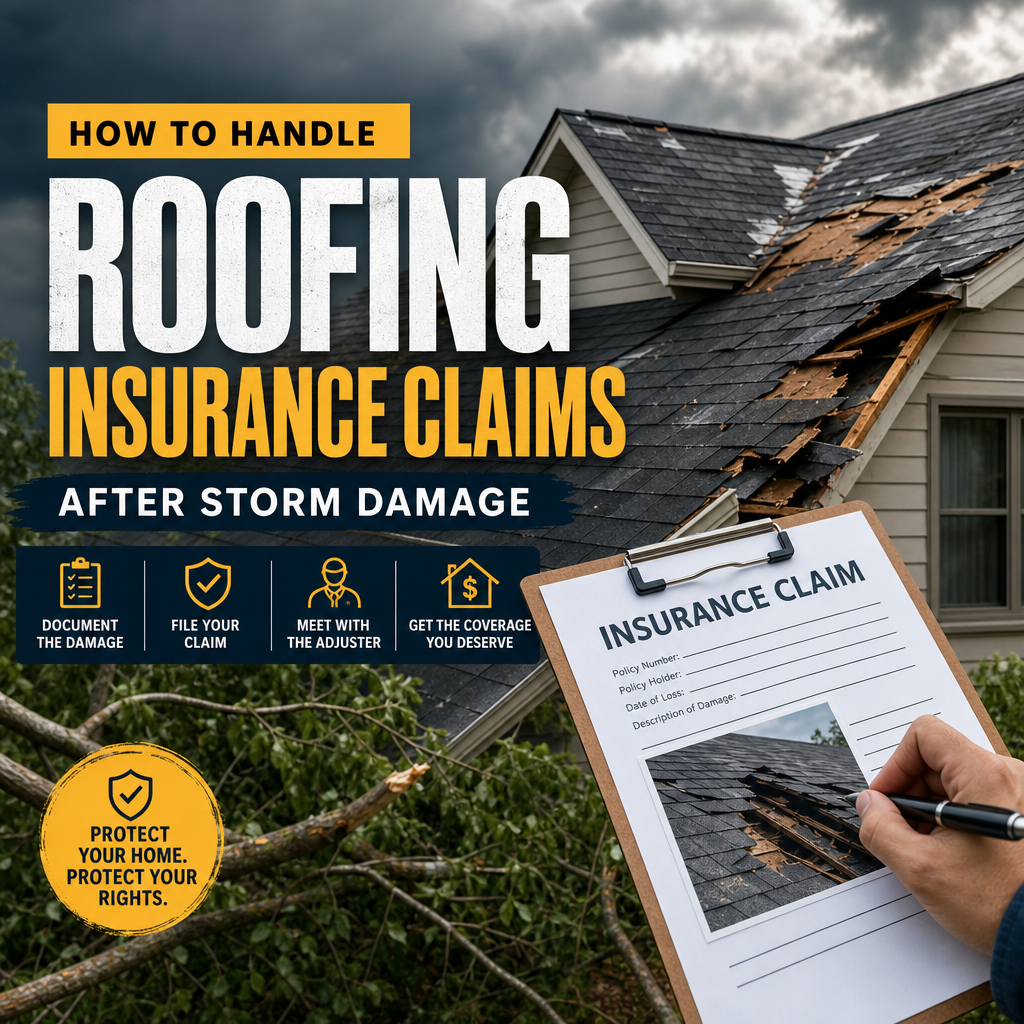
How to Handle Roofing Insurance Claims After Storm Damage
How to Handle Roofing Insurance Claims After Storm Damage
Storms can leave more than broken branches and scattered debris behind. Hail, high winds, and falling debris often damage shingles, flashing, gutters, and even the roof deck itself. When that happens, knowing how to handle roofing insurance claims can make the difference between a smooth repair process and weeks of frustration.
The good news is that most homeowners insurance policies cover sudden storm damage. The challenge is making sure the claim is documented properly, filed on time, and supported with the right evidence. A careful approach helps protect your home, your budget, and your peace of mind.

Start with Safety and a Quick Roof Check
Before worrying about paperwork, make sure your home is safe. If the storm caused visible structural damage, leaks, or fallen power lines, stay away from the affected area and call the proper emergency services if needed.
Once it’s safe, do a basic visual check from the ground or a window. Look for:

- Missing or lifted shingles
- Dented gutters or downspouts
- Broken flashing around chimneys or vents
- Granules collecting in gutters
- Water stains on ceilings or walls
- Tree limbs or debris on the roof
Avoid climbing onto the roof yourself unless you are trained and it is safe to do so. Many injuries happen when homeowners try to inspect storm damage too soon.
Document the Damage Thoroughly
Strong documentation is one of the most important parts of roofing insurance claims. Insurance companies rely on evidence to determine whether damage was caused by the storm and how much it will cost to repair.
Take clear photos and videos of:
- The roof from multiple angles
- Close-up shots of damaged shingles, flashing, or vents
- Interior signs of leaks or water stains
- Damage to gutters, siding, or nearby property
- Fallen branches, hailstones, or debris around the home
If you can, note the date and time of the storm and save any local weather reports. Keep records of any temporary repairs, such as tarping, since insurers may reimburse reasonable emergency protection costs.
Review Your Insurance Policy
Before filing a claim, take a few minutes to review your homeowners policy. Pay attention to:
- What types of storm damage are covered
- Your deductible amount
- Whether your policy uses replacement cost or actual cash value
- Any deadlines for reporting damage
- Special rules for wind, hail, or named storms
Understanding these details helps set realistic expectations. For example, if your policy has a higher wind or hail deductible, your out-of-pocket cost may be more than you expect. Knowing this early can help you decide how to move forward.
Contact Your Insurance Company Promptly
After documenting the damage, notify your insurance company as soon as possible. Most policies require prompt reporting, and delays can complicate the claim.
When you call, be prepared to provide:
- Your policy number
- The date of the storm
- A general description of the damage
- Photos or videos, if requested
- Information about any temporary repairs already made
Ask the insurance company how the claims process works, what forms you need, and whether they will assign an adjuster. Keep a record of every phone call, email, and document you send.
Get a Professional Roof Inspection
Even if the damage seems minor, it’s smart to have a licensed roofing contractor inspect the roof. A professional can identify issues that are easy to miss, such as lifted shingles, hidden leaks, or compromised underlayment.
A contractor’s inspection can help in several ways:
- Confirm the full extent of the damage
- Provide a detailed repair estimate
- Support your claim with professional findings
- Identify pre-existing issues versus storm-related damage
Choose a reputable local roofer with experience in storm repairs and insurance claims. Their report can be valuable when speaking with your insurer or meeting with the adjuster.
Work with the Insurance Adjuster
After the claim is opened, your insurer will usually send an adjuster to inspect the roof. This visit is a key part of roofing insurance claims, so it helps to be prepared.
If possible, have your roofing contractor present during the inspection. They can point out damage that might otherwise be overlooked and help explain the repair scope in technical terms.
During the inspection:
- Share your photos, videos, and contractor estimate
- Point out all areas of concern
- Ask questions about anything unclear
- Take notes on what the adjuster says
If the adjuster’s assessment seems too low or misses obvious damage, you can request a reinspection or submit additional documentation. Staying organized and professional helps keep the process moving.
Understand the Claim Estimate and Settlement
Once the adjuster completes the review, the insurance company will send an estimate or settlement summary. Read it carefully. Make sure it covers all necessary repairs, including materials, labor, and any related items like flashing or gutters.
Watch for these common issues:
- Missing line items for code-required repairs
- Low labor costs
- Incomplete damage scope
- Deductibles not clearly explained
- Depreciation withheld on actual cash value policies
If something doesn’t look right, compare the insurer’s estimate with your contractor’s bid. If there are major differences, ask for clarification before agreeing to the settlement.
Make Temporary Repairs, But Don’t Rush Permanent Ones
If your roof is leaking, temporary repairs may be necessary to prevent further damage. Tarping, sealing, or emergency patching can reduce the risk of mold, interior damage, and worsening structural issues.
Keep all receipts for these temporary measures. However, avoid starting full roof replacement work until the claim is approved unless your insurance company specifically tells you otherwise. Once major repairs begin, it may be harder to prove the original storm damage.
Keep the Focus Keyword in Mind: Roofing Insurance Claims
Handling roofing insurance claims after storm damage is much easier when you stay organized, document everything, and communicate clearly with both your insurer and contractor. The process may feel overwhelming at first, but each step builds a stronger case for fair compensation.
The most important thing is to act quickly without rushing. Safety comes first, then documentation, then professional evaluation. With the right approach, you can move from storm damage to a fully repaired roof with less stress and fewer surprises.
Final Thoughts
Storm damage can be unsettling, but a well-managed claim can help restore your home without draining your savings. By inspecting safely, documenting carefully, reviewing your policy, and working with trusted professionals, you can handle roofing insurance claims with confidence.
A little preparation goes a long way. The more informed you are, the smoother the process will be from the first phone call to the final repair.
