
How Bay Area Wildfire Smoke Affects Your Roof’s Lifespan
How Bay Area Wildfire Smoke Impacts Your Roof’s Lifespan
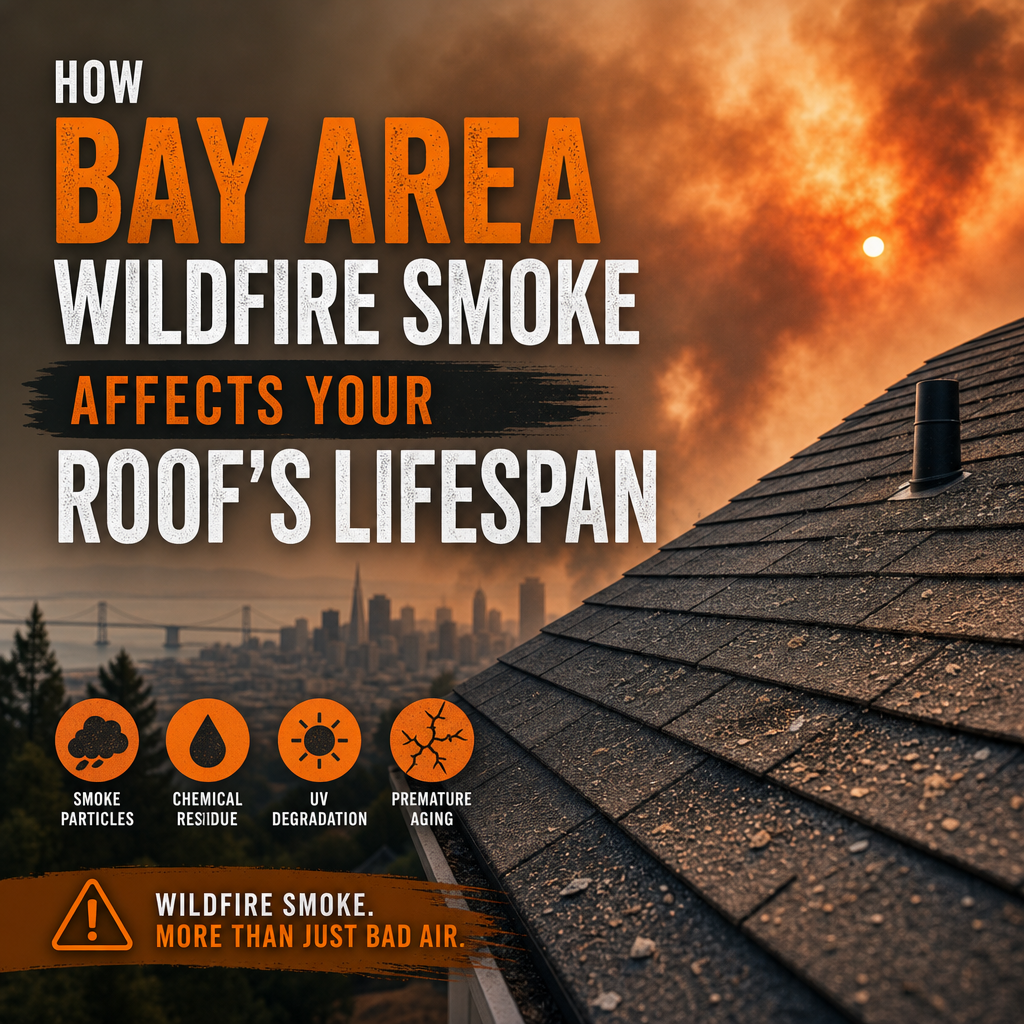
Wildfire season in the Bay Area brings more than hazy skies and poor air quality. It also creates a less obvious threat to your home: roof damage. Over time, Bay Area wildfire smoke impacts your roof’s lifespan by coating materials with residue, increasing heat stress, and accelerating wear in ways many homeowners do not notice right away.
While direct flames are the most dramatic danger, smoke can quietly shorten the life of asphalt shingles, tile, metal roofing, gutters, vents, and even the underlayment beneath your roof. Understanding how this happens can help you protect your home before small issues turn into expensive repairs.

What Smoke Does to Roofing Materials
Wildfire smoke is not just “dirty air.” It carries ash, fine soot, tar-like particles, and microscopic debris that settle onto roofing surfaces. In the Bay Area, where wildfire smoke can linger for days or weeks, those particles build up fast.
1. Soot and ash trap moisture
When soot and ash collect on your roof, they can hold moisture after fog, rain, or morning condensation. That trapped moisture encourages:

- Surface staining
- Mold and mildew growth
- Faster deterioration of shingles and coatings
- Corrosion on flashing, fasteners, and metal components
This is especially problematic in coastal and inland Bay Area microclimates where temperature swings and humidity already stress roofing systems.
2. Heat and UV exposure become more intense
Smoke can thicken the atmosphere, but that does not fully protect your roof from heat. In many cases, wildfire conditions create prolonged exposure to high temperatures and intense sun once the smoke clears.
Extreme heat can cause:
- Asphalt shingles to dry out and crack
- Sealants to weaken
- Tiles to expand and contract
- Roof membranes to become brittle
If your roof is already aging, smoke season may push it closer to failure.
3. Acidic particles can wear down surfaces
Wildfire smoke often contains acidic compounds from burned vegetation, plastics, and other materials. When these particles settle on a roof and mix with moisture, they can slowly corrode protective layers. Over time, this can reduce the roof’s ability to resist water intrusion and weather damage.
Signs Wildfire Smoke Is Affecting Your Roof
The effects are not always dramatic at first. Still, there are a few signs that smoke exposure may be shortening your roof’s lifespan.
Look for these warning signs:
- Dark streaks or film on shingles or tiles
- Gritty buildup in gutters and downspouts
- Rust on flashing, vents, or fasteners
- Cracked, curled, or brittle shingles
- Faded or uneven roof color
- Debris trapped around skylights, valleys, and roof edges
- Musty odors or signs of moisture in the attic
If your roof looks dirty after a smoke event, it may need more than a quick rinse. In some cases, the residue can be stubborn enough to require professional cleaning or inspection.
Why Bay Area Homes Are Especially Vulnerable
The Bay Area has a mix of roofing styles, including asphalt shingles, clay tile, concrete tile, metal, and flat membrane systems. Each material responds differently to smoke exposure, but none are immune.
Local factors increase the risk:
- Frequent wildfire smoke events: Recurring smoke means repeated exposure over multiple seasons.
- Microclimates: Fog, wind, heat, and humidity can all interact with smoke residue.
- Older housing stock: Many homes already have aging roofs that are less resistant to contamination and heat stress.
- Tree cover and debris: Leaves, needles, and branches can trap smoke particles and speed up deterioration.
In short, the combination of smoke, weather, and aging materials makes Bay Area roofs especially vulnerable.
How to Protect Your Roof During Smoke Season
You cannot control wildfire smoke, but you can take steps to reduce its impact on your roof.
Practical roof protection tips:
-
Inspect your roof after smoke events
Check for soot buildup, discoloration, and debris around roof valleys, gutters, and vents. -
Clean gutters regularly
Ash and fine debris can clog drainage and cause water to back up under roofing materials. -
Wash the roof carefully
Use the correct method for your roofing type. Gentle cleaning is important, especially for shingles and tile roofs. -
Trim nearby trees
Reducing leaf litter and branches around the roof helps prevent debris accumulation. -
Check attic ventilation
Proper airflow helps manage heat buildup that can worsen smoke-related wear. -
Schedule a professional inspection
A roofing contractor can spot hidden issues such as loose flashing, deteriorated sealants, or early moisture damage.
When to Call a Roofing Professional
After a major wildfire smoke event, a roof may look fine from the ground but still have underlying damage. It is smart to call a professional if you notice:
- Persistent soot staining
- Loose or missing shingles
- Cracked tile
- Rusted metal components
- Water leaks after a smoke-heavy season
- Debris accumulation that is hard to remove safely
A timely inspection can extend the roof’s service life and prevent small issues from becoming costly repairs.
The Bottom Line
Wildfire smoke is more than a temporary inconvenience. It can leave behind residue, trap moisture, increase heat stress, and weaken roofing materials over time. For Bay Area homeowners, the message is clear: Bay Area wildfire smoke impacts your roof’s lifespan in subtle but serious ways.
Regular inspections, careful cleaning, and prompt maintenance can go a long way toward protecting your roof and preserving your home’s value. By staying ahead of smoke-related damage, you can help your roof last longer and perform better through future wildfire seasons.