
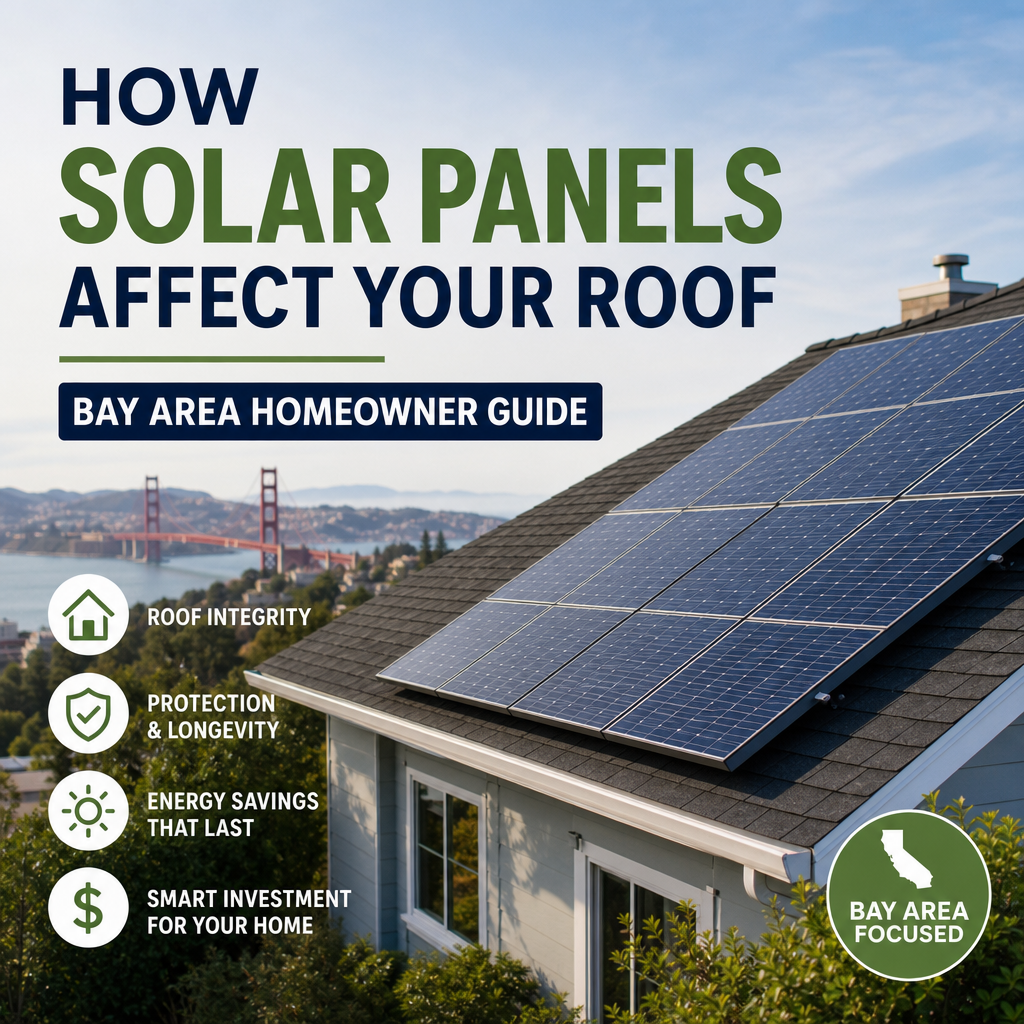
How Solar Panels Affect Your Roof: Bay Area Homeowner Guide
How Solar Panels Affect Your Roof: What Bay Area Homeowners Should Know
Installing solar panels is one of the most popular ways Bay Area homeowners are lowering energy bills and reducing carbon footprints. But before going solar, many people ask the same important question: How will solar panels affect my roof?
The answer depends on your roof’s age, material, condition, and how the system is installed. Solar can be a smart investment, but only when your roof is ready for it. Understanding the relationship between your roof and your solar array can help you avoid costly repairs and protect your home for the long term.

The Biggest Factor: Roof Condition Before Installation
A solar system can last 25 years or more, so your roof should be in good shape before installation begins. If your roof is already near the end of its life, adding panels first may create problems later.
Once panels are installed, removing them just to replace shingles or underlayment can be expensive. That’s why many contractors recommend a roof inspection before installation. In some cases, it may make sense to replace the roof first, especially if:

- Your roof is older than 15–20 years
- You already have leaks or water damage
- The shingles are curling, cracked, or missing
- The roof has soft spots or structural concerns
For Bay Area homeowners, this step is especially important because coastal moisture, sun exposure, and seasonal temperature changes can all affect roofing materials over time.
Can Solar Panels Damage Your Roof?
When installed correctly, solar panels should not damage your roof. In fact, they can sometimes protect the sections underneath them from direct sun, rain, and weathering. That said, poor installation can create issues.
Common problems include:
Improper Roof Penetrations
Most mounted solar systems require holes to be drilled into the roof to secure racking hardware. If these penetrations are not sealed properly, water can seep in and cause leaks.
Low-Quality Flashing or Mounts
Flashing helps prevent water intrusion around the mounting points. Using the wrong materials, or cutting corners during installation, increases the chance of damage over time.
Weight and Structural Stress
Although solar panels are not excessively heavy, they do add weight. On an aging or weakened roof, that extra load may be a concern. A structural review can help determine whether your roof can handle the system safely.
Foot Traffic During Installation
Installers need to move around on the roof while working. If your roof is already fragile, installation can loosen materials or cause breakage. Experienced installers know how to minimize this risk.
How Different Roof Types Hold Up
Not all roofing materials respond to solar panels in the same way.
Asphalt Shingles
This is one of the easiest roof types for solar installation. It’s common, relatively affordable to work with, and compatible with standard mounting systems. If the shingles are in good condition, solar usually works well here.
Tile Roofs
Clay and concrete tile roofs are also common in the Bay Area, but they can be more delicate. Installers may need to remove tiles carefully and use specialized mounting hardware. If done improperly, tiles can crack.
Metal Roofs
Standing seam metal roofs are often an excellent match for solar because many systems can attach without roof penetrations. That can reduce leak risk and make installation cleaner.
Flat Roofs
Flat roofs can support solar too, but the system typically requires angled racking to optimize sun exposure. Drainage and waterproofing become especially important.
Will Solar Panels Extend Roof Life?
In some cases, yes. Solar panels block direct UV exposure and some weather impact on the areas of roof they cover. That can slow wear and fading beneath the panels.
However, this benefit only applies to the covered areas. The rest of the roof still ages normally, so you should not assume a solar installation means the whole roof will last longer. It may also create a patchwork effect if you ever remove panels later, since the roof under the array may look newer than the surrounding sections.
Maintenance Considerations After Installation
Once panels are installed, roof maintenance becomes a little more complicated. You can still inspect and repair your roof, but access around the solar array may be limited.
Keep these tips in mind:
- Schedule regular roof inspections
- Check for signs of leaks after heavy rain
- Keep gutters and drainage paths clear
- Have panels cleaned and inspected as recommended
- Document the installation layout in case future roof work is needed
Bay Area homeowners should also pay attention after wildfire smoke events, strong winds, and winter storms, which can affect both panels and roofing materials.
Why Local Expertise Matters
Choosing an installer who understands both solar and roofing is critical. In the Bay Area, roofs vary widely from home to home, and local building codes, weather patterns, and permit requirements can all influence the project.
A qualified professional should evaluate:
- Roof age and expected remaining life
- Structural strength
- Waterproofing details
- Panel placement for sun exposure
- Access for future roof repairs
This kind of planning helps ensure your system performs well without creating avoidable roof issues.
Final Thoughts
Solar panels can be a great upgrade, but only if your roof is ready for them. For Bay Area homeowners, the key is to assess roof condition first, work with experienced installers, and plan for long-term maintenance.
When installed properly, solar can protect part of your roof, lower energy costs, and add value to your home. The smartest approach is to treat your roof and solar system as one connected investment.
