
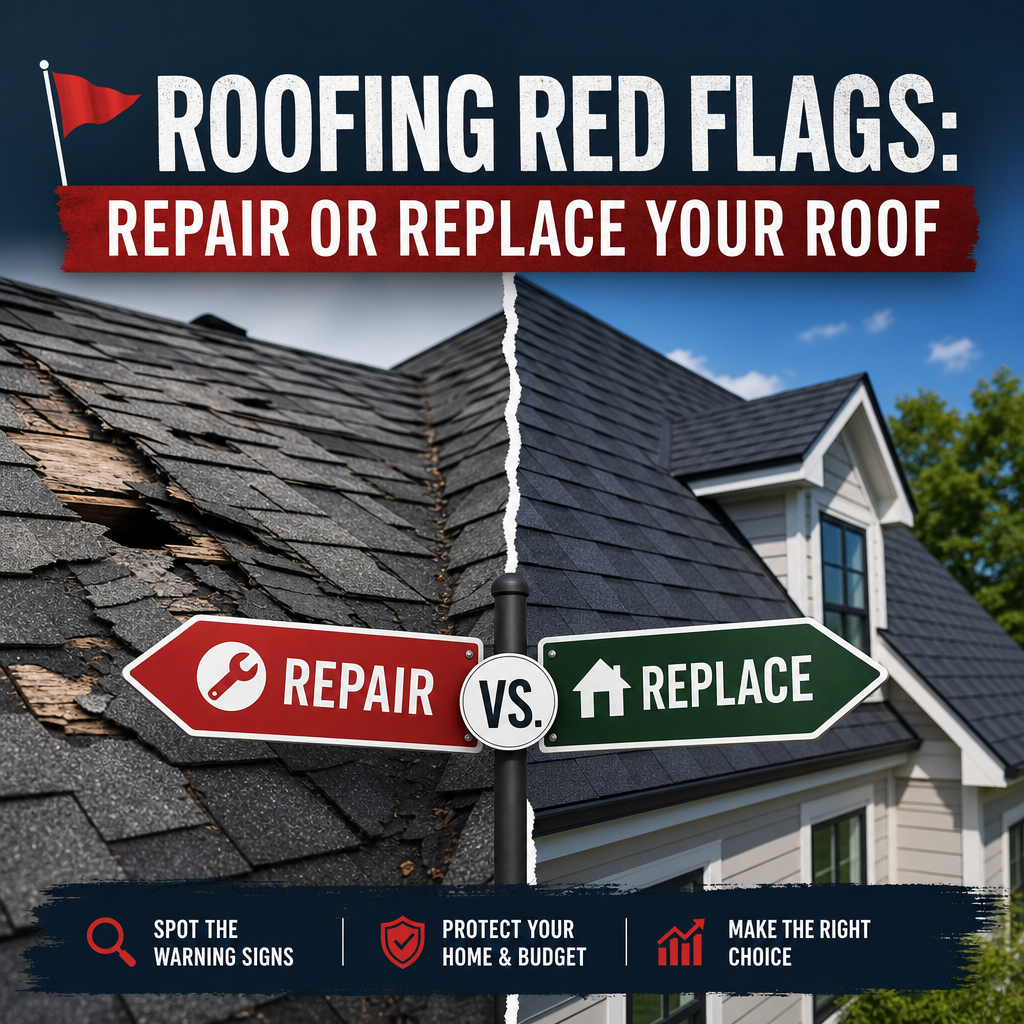
Roofing Red Flags: Repair or Replace Your Roof
Roofing Red Flags: When to Repair vs. Replace Your Roof
Your roof does more than keep out rain. It protects your home, supports energy efficiency, and helps preserve your property’s value. But like any major part of your house, it won’t last forever. The tricky part is knowing whether a problem calls for a simple fix or a full replacement.
Making the right call can save you money, prevent bigger damage, and give you peace of mind. Here are the most common roofing red flags to watch for and how to decide whether to repair or replace your roof.

Common Signs Your Roof Needs Attention
Some roof issues are obvious, while others are easy to miss until they become serious. Regular inspections, especially after storms, can help you catch trouble early.
Missing or damaged shingles
A few missing, curled, cracked, or broken shingles often point to a repairable issue. Wind, hail, and age can all cause shingle damage. If the damage is limited to a small area, a repair may be enough.

However, if shingles are failing across multiple sections of the roof, that may signal broader wear and tear.
Leaks and water stains
Water stains on ceilings or walls are a major warning sign. A small leak can often be repaired if the source is easy to locate and the surrounding structure is sound.
If leaks are recurring, widespread, or have already caused mold, rot, or insulation damage, replacement may be the smarter choice.
Sagging rooflines
A roof should have a straight, stable appearance. Sagging or dipping areas can indicate serious structural issues, including rot, weakened decking, or long-term water damage.
This is one of the biggest roofing red flags because it often means the problem goes deeper than the surface material.
Granules in gutters
If your gutters are collecting a lot of shingle granules, your roof may be reaching the end of its lifespan. Granule loss is normal over time, but excessive amounts suggest the shingles are deteriorating.
A minor amount of granule loss may not require immediate replacement, but heavy shedding usually means the roof is aging out.
When Repair Makes Sense
Not every roof problem requires a full overhaul. In many cases, a targeted repair is the best and most cost-effective solution.
Repair is often enough when:
- The damage is limited to one area
- The roof is relatively new
- There is no structural damage
- The leak source is isolated and easy to fix
- Matching materials are still available
For example, replacing a few storm-damaged shingles or sealing a small flashing issue can restore your roof without major expense.
Repairs are especially practical when your roof still has many years of life left and the damage appears to be the result of a one-time event rather than general deterioration.
When Replacement Is the Better Option
Sometimes repairs only delay the inevitable. If your roof is showing signs of widespread failure, replacement may save you money in the long run.
Replacement is often the better choice when:
- The roof is near the end of its expected lifespan
- Multiple leaks are appearing in different places
- Shingles are curling, cracking, or missing across large areas
- There is visible sagging or structural damage
- Past repairs are no longer holding up
- Mold, rot, or water damage is affecting the roof deck
An old roof with repeated problems can become a cycle of temporary fixes. In these cases, replacing the roof can provide better protection and reduce the risk of costly interior damage.
Age Matters More Than You Think
A roof’s age is one of the most important factors in the repair-or-replace decision. Most asphalt shingle roofs last around 20 to 30 years, depending on material quality, installation, and climate.
If your roof is nearing the end of its life and showing signs of wear, a repair may only buy you a little time. On the other hand, a newer roof with isolated damage is usually worth fixing.
Even if the damage looks minor, an older roof may have hidden weaknesses that make replacement a more practical investment.
Weighing Cost vs. Long-Term Value
It is natural to focus on the immediate cost of a repair. But when roofing problems keep coming back, the long-term expense can add up quickly.
Ask yourself:
- How often have I already repaired this roof?
- Is the damage getting worse over time?
- Will a repair solve the problem for several years?
- Could replacement lower future maintenance costs?
A roof replacement has a higher upfront cost, but it may provide better value if your current roof is already failing. It can also improve curb appeal, boost energy efficiency, and increase buyer confidence if you plan to sell.
Don’t Ignore Storm Damage
After hail, high winds, or heavy rain, inspect your roof as soon as it is safe to do so. Storm damage may not always be visible from the ground, but small issues can quickly turn into leaks.
If the damage is isolated, repairs may be enough. But if storms have affected multiple areas, or if there are repeated weather-related issues, a replacement may be necessary.
Insurance may also play a role, so documenting the damage with photos and professional assessments can be helpful.
Final Thoughts
Deciding whether to repair or replace your roof comes down to the extent of the damage, the age of the roof, and the condition of the underlying structure. Small, isolated problems often justify a repair. Widespread wear, recurring leaks, and structural concerns usually point toward replacement.
By paying attention to roofing red flags early, you can protect your home and make a smarter investment in its future.
