
The Real Lifespan of Bay Area Roofs: Data Revealed
The Real Lifespan of Bay Area Roofs: What the Data Shows
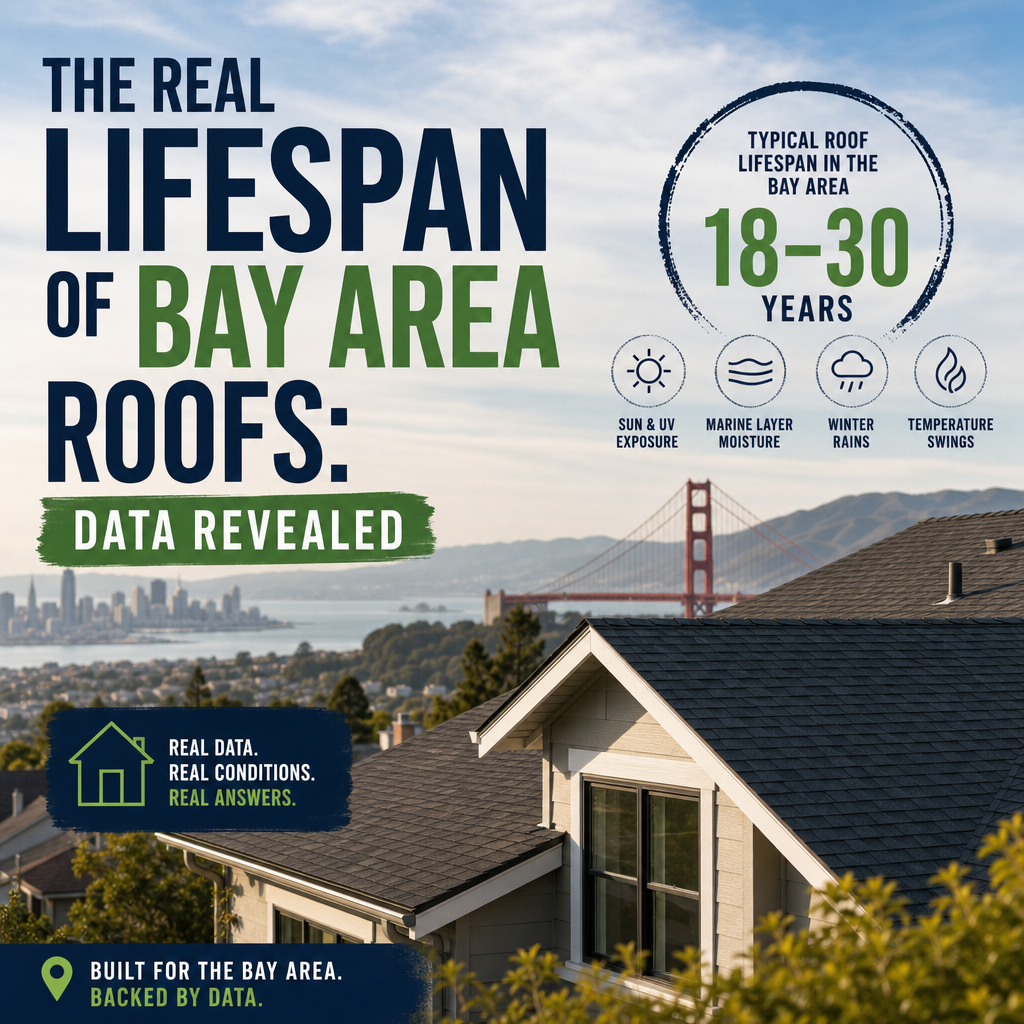
When homeowners ask how long a roof should last in the Bay Area, the answer is rarely simple. Coastal moisture, summer heat, salt air, fog, tree cover, and local microclimates all affect how quickly roofing materials age. The real lifespan of Bay Area roofs depends not just on the material, but on where the home sits and how well the roof is maintained.
A roof in San Francisco may face dense fog and constant moisture. A roof inland in Walnut Creek or San Jose may deal with stronger sun exposure and more heat swings. In both cases, the climate can shorten or extend the roof’s useful life compared with national averages.

What the Data Says About Roof Lifespan
National roofing estimates often suggest broad timelines, but Bay Area conditions can shift those numbers. Here’s a realistic look at common roof types and how long they often last in this region:
Asphalt Shingles
- Typical lifespan: 15 to 25 years
- Bay Area reality: Often closer to the lower end in coastal or high-sun areas
Asphalt shingles are common because they are affordable and easy to install. However, they can wear faster in places with intense UV exposure or frequent moisture. In fog-heavy neighborhoods, algae growth and trapped dampness can also cause premature aging.

Composition Roofing
- Typical lifespan: 20 to 30 years
- Bay Area reality: Usually performs well with regular maintenance
Many homes use composition roofing because it balances cost and durability. In the Bay Area, these roofs can last a solid two to three decades if flashing, ventilation, and drainage are kept in good shape.
Clay and Concrete Tile
- Typical lifespan: 40 to 50+ years
- Bay Area reality: Often exceeds expectations if underlayment is maintained
Tile roofs are among the longest-lasting options. The tiles themselves can remain intact for decades, but the underlayment beneath them often fails first. In many Bay Area homes, the visible tile may look fine long after the hidden layers need replacement.
Metal Roofing
- Typical lifespan: 40 to 70 years
- Bay Area reality: Excellent longevity, especially with quality coatings
Metal roofing handles sun, rain, and temperature shifts well. It resists fire and sheds water efficiently, which makes it attractive in many California neighborhoods. With proper installation, it can outlast most other residential roofing systems.
Wood Shake
- Typical lifespan: 20 to 30 years
- Bay Area reality: Highly dependent on moisture, maintenance, and local rules
Wood shake has a classic look, but it is more vulnerable to moisture, rot, and fire concerns. In humid or foggy areas, the lifespan may be shorter unless the roof is consistently cleaned and treated.
Why Bay Area Roofs Age Differently
The Bay Area is not one roofing climate. A few miles can make a big difference in how a roof performs.
Fog and Moisture
In coastal areas, frequent fog can keep roofing materials damp for long periods. That repeated exposure encourages moss, algae, and slow deterioration, especially on shaded roofs.
Sun and Heat
Inland homes often deal with more direct sun and higher daytime temperatures. UV rays dry out shingles and cause expansion and contraction, which can weaken seals and crack materials over time.
Salt Air
Homes closer to the coast may experience salt exposure. Over time, salt can speed up corrosion on flashing, fasteners, and metal components.
Trees and Debris
Heavy tree cover adds another challenge. Leaves, needles, and branches trap moisture and block drainage. Clogged gutters and roof valleys can shorten the life of even a well-built roof.
Installation Quality
A roof’s lifespan often has as much to do with installation as with material choice. Poor flashing, weak ventilation, or improper nailing can shave years off expected performance.
Signs Your Roof May Be Near the End
Even if your roof has not reached its projected age, visible problems may signal it is failing sooner than expected.
Watch for these common signs:
- Curling, cracked, or missing shingles
- Dark streaks, moss, or algae growth
- Granules collecting in gutters
- Sagging areas on the roofline
- Water stains on ceilings or walls
- Rusted flashing or damaged vents
- Soft spots or leaks after rain
If several of these appear at once, your roof may be nearing the end of its service life.
How to Make a Roof Last Longer
The good news is that many Bay Area roofs last longer with routine care. Small steps can prevent costly damage and delay full replacement.
Do Regular Inspections
Have the roof inspected at least once a year, and after major storms. Catching minor problems early can extend lifespan significantly.
Keep Gutters Clean
Blocked gutters allow water to back up under roofing materials. Clean gutters help prevent rot, leaks, and edge damage.
Trim Overhanging Trees
Reducing debris and shade helps keep the roof dry and limits moss growth.
Repair Flashing Quickly
Flashing around chimneys, skylights, and vents is one of the most common leak points. Fixing damaged flashing early can protect the entire system.
Improve Ventilation
Good attic ventilation helps control heat and moisture, both of which affect roof aging.
The Bottom Line
The real lifespan of Bay Area roofs is shaped by more than the label on the roofing material. Local weather patterns, maintenance habits, installation quality, and neighborhood conditions all matter. While some roofs may last only 15 to 20 years, others can remain effective for 40 years or more.
If your roof is approaching the average lifespan for its material, or if it shows signs of wear sooner than expected, it is worth having it evaluated. In the Bay Area, a roof that seems fine from the street may already be aging faster than you think.