

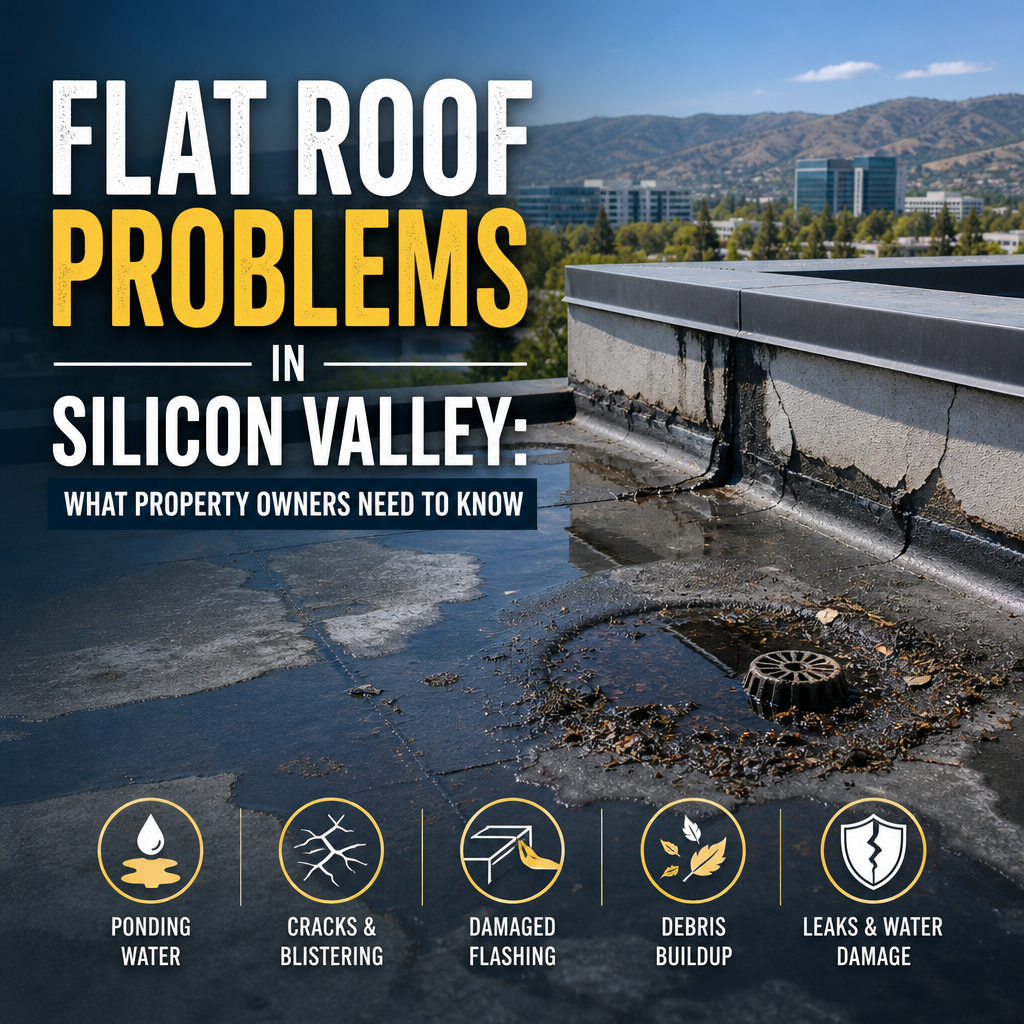
Flat Roof Problems in Silicon Valley: What Property Owners Need to Know
Flat Roof Problems in Silicon Valley: What Property Owners Must Know
Flat roofs are a popular choice for homes, offices, and commercial buildings across Silicon Valley. They offer a modern look, usable rooftop space, and often lower installation costs than pitched roofs. But while they can be practical, they also come with unique maintenance challenges.
In a region known for sunshine, seasonal rain, temperature swings, and occasional wind events, flat roof problems in Silicon Valley can develop faster than many property owners expect. Knowing what to watch for can help prevent leaks, reduce repair costs, and extend the life of your roof.

Why Flat Roofs Need Special Attention
Unlike sloped roofs, flat roofs do not shed water as quickly. Even though they are built with a slight pitch, water can still pool in low spots after rain. Over time, standing water, UV exposure, and debris buildup can wear down roofing materials.
Silicon Valley weather may seem mild, but the combination of dry heat, intense sun, and seasonal storms can be tough on flat roofing systems. That means regular inspections and timely repairs are essential.

Common Flat Roof Problems
1. Ponding Water
One of the most common issues is ponding water, which happens when water remains on the roof for more than 48 hours after rainfall. This often signals poor drainage, uneven settling, or clogged drains.
Why it matters:
- Increases the risk of leaks
- Accelerates membrane breakdown
- Adds extra weight to the roof structure
If ponding water is ignored, it can quickly lead to expensive damage.
2. Membrane Cracks and Blistering
Flat roofs often rely on membranes such as TPO, PVC, EPDM, or modified bitumen. These materials are durable, but they can crack, bubble, or blister over time due to heat and aging.
In Silicon Valley, strong sun exposure can dry out roofing materials and make them brittle. Once cracks form, water can seep into the layers beneath the roof surface.
3. Drainage Issues
Drainage problems are another major concern. Leaves, dirt, and debris can clog roof drains, scuppers, or gutters. When water has nowhere to go, it starts to collect on the surface.
Signs of poor drainage include:
- Visible standing water
- Overflowing gutters
- Staining around drains
- Sagging areas on the roof
Routine cleaning can help prevent these problems before they become serious.
4. Leaks Around Flashing and Seams
Flashing is used around vents, edges, skylights, and rooftop equipment to keep water out. On flat roofs, these transition points are especially vulnerable. Seams can also separate over time as materials expand and contract with temperature changes.
Even a small gap can allow moisture to enter the building. Because leaks often travel before showing visible damage inside, the source may be harder to find than expected.
5. UV and Heat Damage
The California sun can be relentless. Prolonged UV exposure weakens many roofing materials, causing them to fade, dry out, or deteriorate. Heat can also cause roofing layers to expand and contract, leading to stress and eventual damage.
This is one reason flat roof maintenance in Silicon Valley should never be treated as optional. Regular inspections help catch early signs of wear before major repairs are needed.
Warning Signs Property Owners Should Not Ignore
Flat roof issues often begin subtly. Catching them early can make all the difference.
Watch for these warning signs:
- Water stains on ceilings or walls
- Musty odors inside the building
- Bubbling or soft spots on the roof surface
- Cracks near seams or flashing
- Higher indoor humidity
- Increased energy bills from insulation damage
If you notice any of these, it is best to schedule a professional roof inspection right away.
How Property Owners Can Reduce Risk
Preventing flat roof problems in Silicon Valley starts with consistent care. A few simple habits can go a long way.
Schedule Regular Inspections
Have the roof inspected at least twice a year, ideally in spring and fall. It is also wise to inspect after major storms or periods of extreme heat.
Keep the Roof Clean
Remove leaves, branches, and debris from the roof surface and drainage system. Clean drains and gutters so water can flow freely.
Address Minor Repairs Quickly
Small cracks, loose flashing, and damaged seams should be repaired as soon as they are found. Waiting often turns a manageable issue into a much larger one.
Monitor Rooftop Equipment
HVAC units, vents, solar mounts, and other rooftop installations can create extra wear. Make sure these areas are properly sealed and maintained.
Work with a Local Roofing Professional
A roofing contractor familiar with Silicon Valley conditions will understand the local climate, building codes, and most common roof failures. That experience can save time and prevent recurring issues.
When Replacement May Be the Better Option
Sometimes repairs are no longer enough. If a flat roof has widespread membrane damage, repeated leaks, or structural issues from long-term ponding, replacement may be the smarter investment.
A professional evaluation can help determine whether repairs will be cost-effective or whether it is time to plan for a new roof system.
Final Thoughts
Flat roofs can be a reliable and attractive option, but they require active maintenance. From ponding water to UV damage, flat roof problems in Silicon Valley are often tied to drainage, weather exposure, and aging materials.
By staying alert to early warning signs and scheduling regular inspections, property owners can protect their buildings, avoid costly surprises, and get more life out of their roof.