

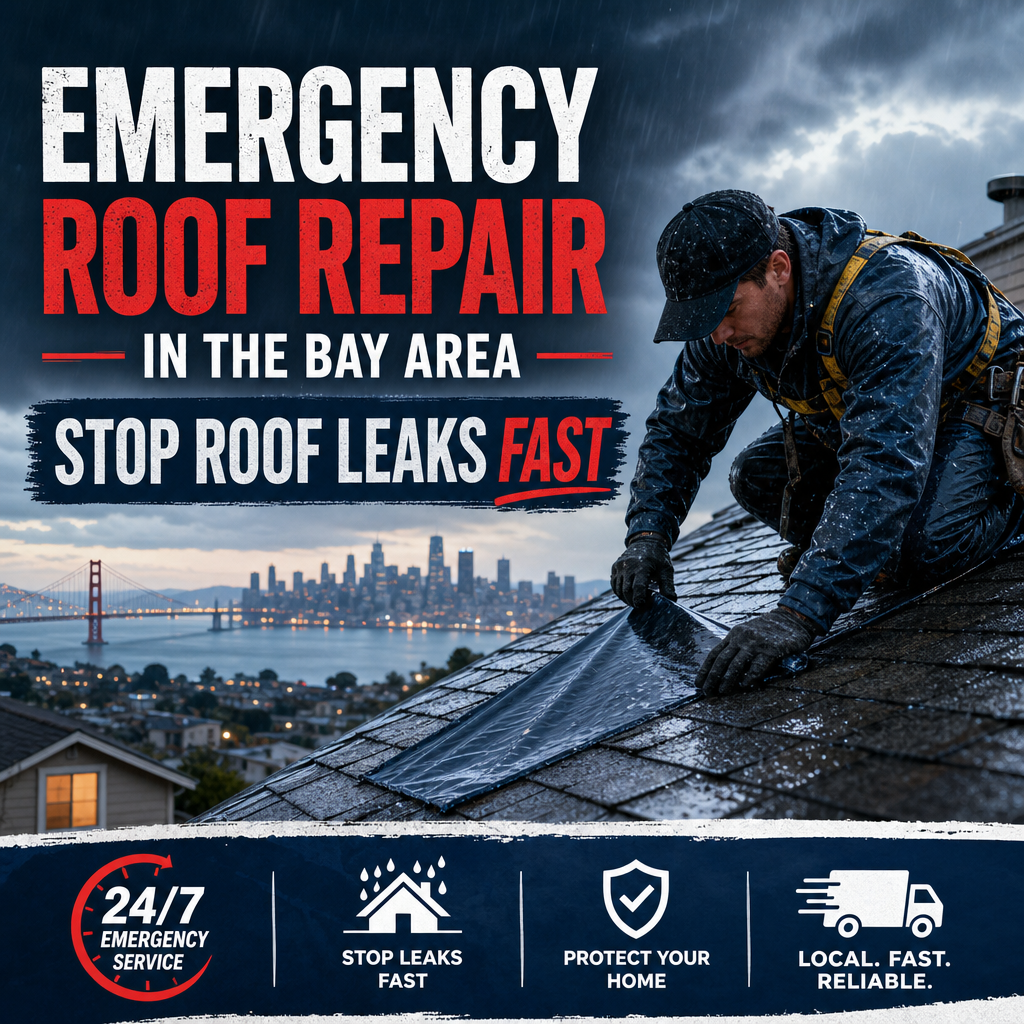
Emergency Roof Repair in the Bay Area: Stop Roof Leaks Fast
Emergency Roof Repair in the Bay Area: What to Do When a Leak Starts
A leaking roof can turn a normal day into a stressful one fast. In the Bay Area, where winter storms, wind, and sudden weather changes can put extra strain on roofing systems, knowing what to do in the first few minutes matters. The right response can reduce water damage, protect your home, and make emergency roof repair in the Bay Area faster and more effective.
First, Stay Safe
Before doing anything else, make sure the area is safe.

If water is dripping near light fixtures, outlets, or appliances, avoid the space until power can be turned off. Wet floors can be slippery, and water may travel farther than you expect through ceilings and walls.
Quick safety steps
- Move people and pets away from the leak
- Turn off electricity in affected areas if water is near wiring
- Avoid standing on wet floors or climbing into the attic unless it is safe
- Watch for sagging ceilings, which can collapse under heavy water
If the leak is severe, treat it as an emergency. A small stain can become a major problem if the roof is actively letting in water.

Contain the Water Damage
Once everyone is safe, focus on limiting the damage inside your home.
Place buckets, pots, or storage bins under the leak to catch water. If water is spreading across a ceiling, poke a small hole in the bulging area only if it is clearly sagging and likely to burst. This can help release trapped water in a controlled way, but only do this if you can do it safely and there are no electrical hazards.
Use towels, tarps, or plastic sheeting to protect furniture, flooring, and electronics. Move important items out of the way if possible. The goal is to stop the leak from damaging more than it already has.
Find the Source, But Don’t Take Risks
The point where water shows up inside is not always the point where the roof is leaking. Water can travel along rafters, insulation, or framing before it appears on a ceiling or wall.
If the weather is calm and it is safe to go outside, look for obvious signs of damage:
- Missing or lifted shingles
- Cracked flashing around chimneys, vents, or skylights
- Debris in gutters or downspouts
- Soft spots or visible tears in roofing materials
Do not climb onto a wet or steep roof. In the Bay Area, emergency roof repair often starts with a quick visual assessment from the ground. A professional roofer can inspect the roof more safely and identify the true source of the problem.
Use a Temporary Fix Only If It’s Safe
Temporary patching can help minimize damage until a roofer arrives, but it should never put you at risk.
If you can safely access the area from the ground or a ladder with proper support, consider placing a tarp over the affected section of roof. Secure it well enough to keep rain out, but only if conditions allow. For small interior leaks, waterproof tape or a temporary sealant may help, though these are not permanent solutions.
Temporary solutions may include:
- Tarping the roof from a safe position
- Using roofing tape for small visible cracks
- Sealing minor openings around flashing
- Catching and redirecting water indoors
Keep in mind that temporary repairs are only meant to reduce damage until full emergency roof repair can be completed.
Call a Local Roofing Professional
When a leak starts, time is important. A Bay Area roofing contractor familiar with local conditions can respond quickly and assess whether the issue is caused by storm damage, age, poor flashing, clogged gutters, or another structural concern.
When you call, be ready to describe:
- Where the leak is located
- How long it has been happening
- Whether it started during rain, wind, or after a storm
- Any visible roof damage you noticed
- Whether water is affecting electrical systems or major appliances
The more detail you provide, the easier it is for the roofer to prepare the right materials and plan the repair.
Why Fast Action Matters in the Bay Area
The Bay Area has a mix of coastal moisture, heavy seasonal rain, and changing temperatures that can wear down roofing materials over time. Even a small leak can lead to mold, damaged insulation, stained drywall, and weakened structural components.
Fast emergency roof repair in the Bay Area helps prevent:
- Interior water damage
- Mold and mildew growth
- Rotting wood and insulation
- Higher repair costs later
- Damage to ceilings, walls, and flooring
The sooner the leak is addressed, the more likely it is that the repair will stay simple and affordable.
Prevent the Next Leak
After the emergency is handled, it is worth thinking about prevention. A roof that leaks once may be showing signs of larger wear, especially if it is older or has already been through several storm seasons.
A regular roof inspection can help catch problems early. Clearing gutters, checking flashing, trimming overhanging branches, and replacing damaged shingles are all small steps that can reduce the chance of another leak.
Good maintenance habits include:
- Inspecting the roof before and after storm season
- Cleaning gutters and downspouts
- Checking attic spaces for damp spots
- Replacing damaged sealant around vents and skylights
- Scheduling professional maintenance when needed
Final Thoughts
A roof leak is stressful, but a calm and quick response can make a big difference. Protect your safety first, contain the water, and contact a trusted professional for emergency roof repair in the Bay Area as soon as possible. With the right steps, you can limit damage now and reduce the chances of a bigger problem later.
